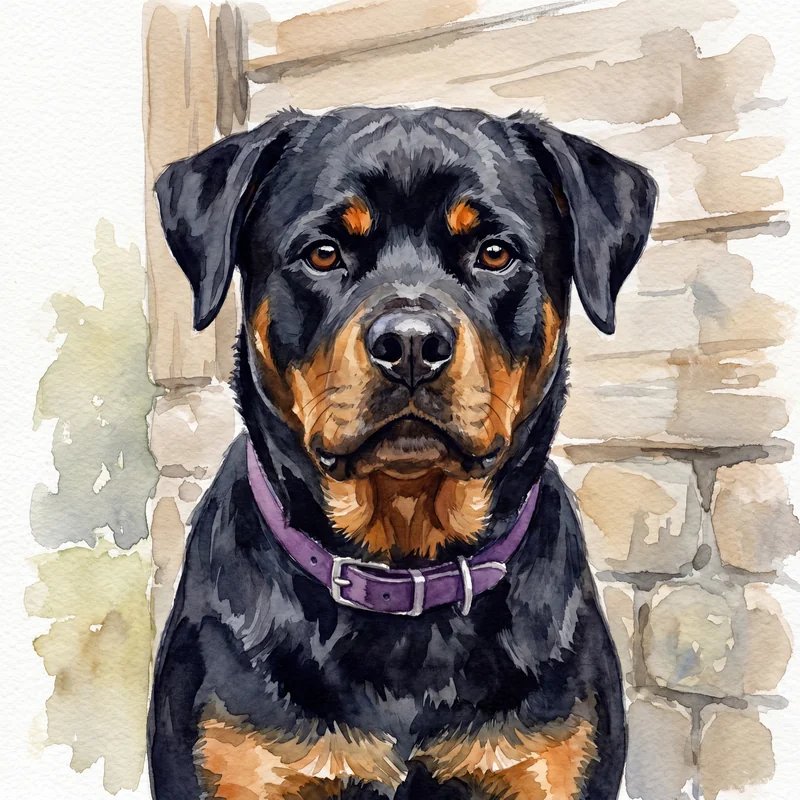
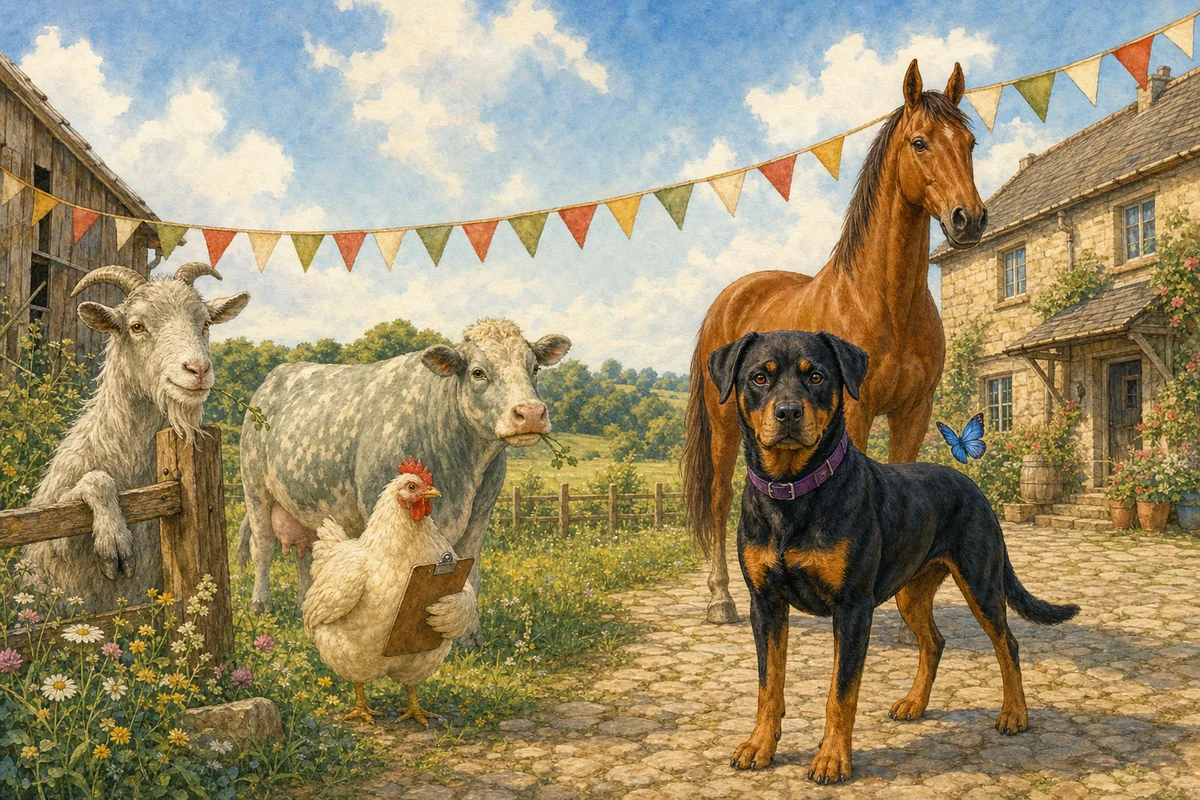
A young Rottweiler arrives at Merevale Creek Farm. Every animal sees a big, scary dog. Across twelve chapters and one storm-struck Jubilee, her actions, never her words, change every single one of them.
Big heart.
Quiet courage.
One very misunderstood Rottweiler.
A four-book seasonal series for newly-confident readers (ages 6–9), set on a small British farm where prejudice is gently undone, kindness travels further than force, and a blue butterfly is always somewhere in the picture.
Every animal on the farm has already made up their mind about Rottweilers. Each chapter — anchored to a retold Aesop fable — gives Zoe one quiet chance to change it. She never argues. She just shows up.
Big heart. Quiet courage.
One very misunderstood Rottweiler.
A four-book seasonal series for newly-confident readers (ages 6–9), set on a small British farm where prejudice is gently undone and kindness travels further than force, and a blue butterfly is always somewhere in the picture. Each book introduces the next book's lead in a quiet background role. Read them in any order; read them in season for the full effect.
The creek is changing, and only Mable has noticed. Patient, unhurried, and braver than anyone knew, the farm's quietest cow leads everyone to the answer while Zoe, for once, steps back.
A small hedgehog who has always been on the outside finds his way in, not by becoming someone else, but by finding the place where she already belongs. The Winter Gathering, and the warmth of being known.
An owl who has only ever watched from the highest branch comes down to the ground. The Spring Fair, the swelling creek, and the difficult, necessary skill of landing.
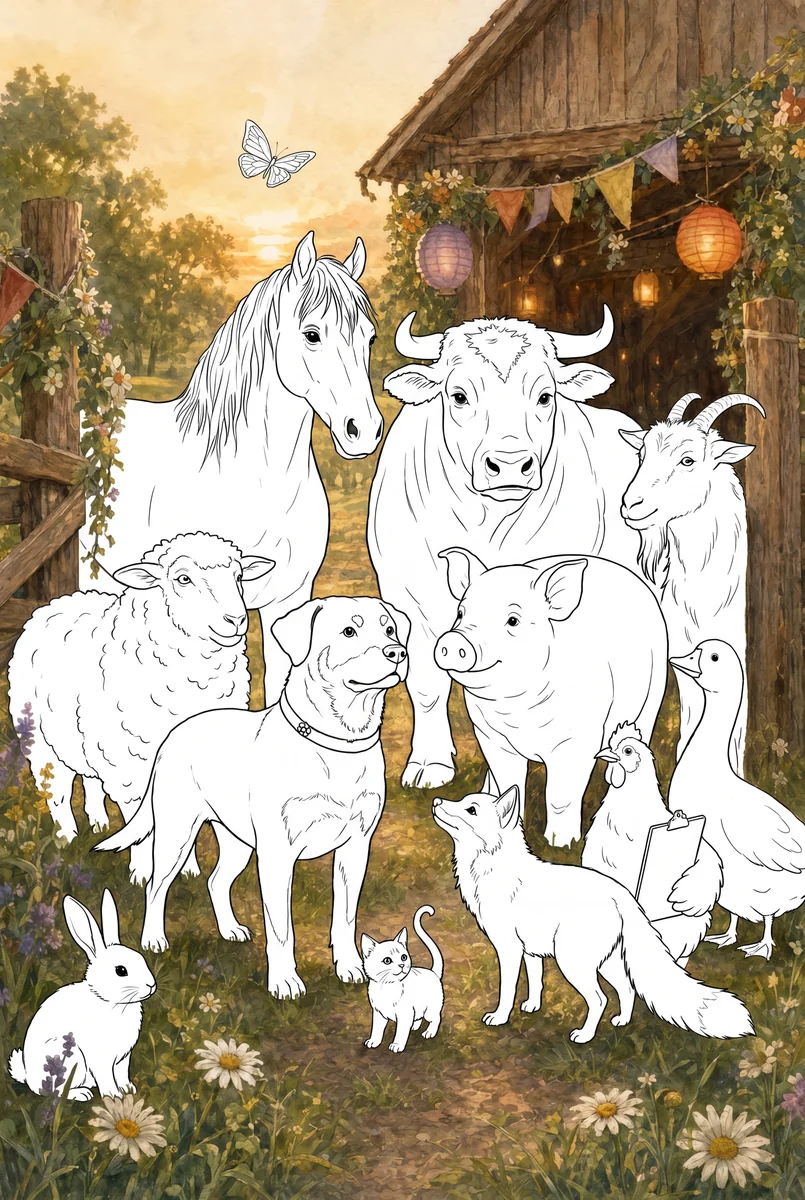
The animals of Merevale Creek Farm
Fifteen named characters, the Blue Butterfly, and The Ladybird mechanic.
Seven female, eight male. Two protagonists are female and two male.
The Blue Butterfly & the Ladybirds
The Blue Butterfly
Common Blue (Polyommatus icarus), a real British species, native to farmland meadows. Never speaks. Never explained. The meaning is the reader's to keep.
The Ladybird Hunt
Common 7-spot Ladybird (Coccinella septempunctata). Hidden only in the illustrations: 1 in Chapter 1, 2 in Chapter 2, all the way to 12 in Chapter 12. 78 per book. 312 across the four-book series. The challenge page at the back of every book lets readers tick them off.
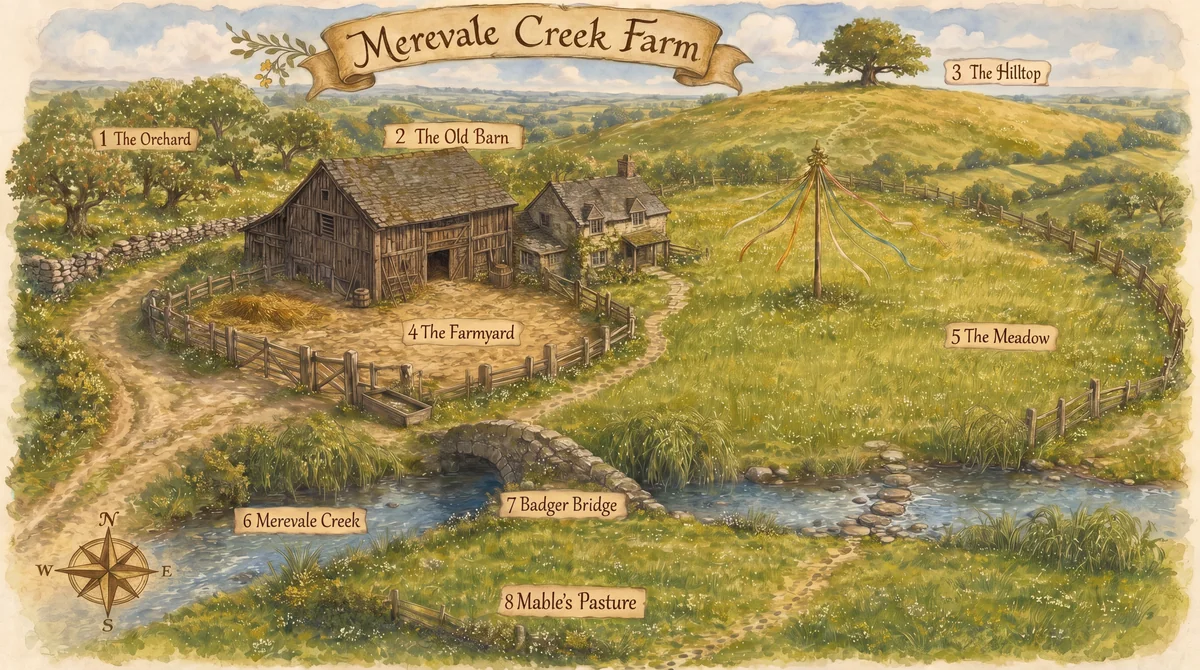
Merevale Creek Farm
Tap any location pin to find out who lives there and what happened there. See if you can find the hidden blue butterfly — and the hidden ladybird.
Tap a number to find out who lives there.
The Ladybird Hunt 🐞
Become a ladybird detective. Click each chapter to tick it off as you find them all. Your progress is kept on this device only.
Book 1: Zoe and the Great Summer Jubilee
78 = 1+2+3+4+5+6+7+8+9+10+11+12. A triangular number. Some of the later ones really are tucked away; you may need to look in shadows, under hooves, or right by the spine.
Why 78?
One ladybird in Chapter 1. Two in Chapter 2. Three in Chapter 3. All the way to twelve in Chapter 12. Add them up and you always get 78:
This is called a triangular number, because if you arrange 78 dots into rows of 1, 2, 3... up to 12, they form a perfect triangle. Mathematicians have known about triangular numbers since ancient Greece.
There is also a shortcut. To find any triangular number, multiply the last number by the next one up, then halve it:
Sharp readers who spot the pattern, and work out the total before finishing the book, feel clever for exactly the right reasons. That is entirely intentional.
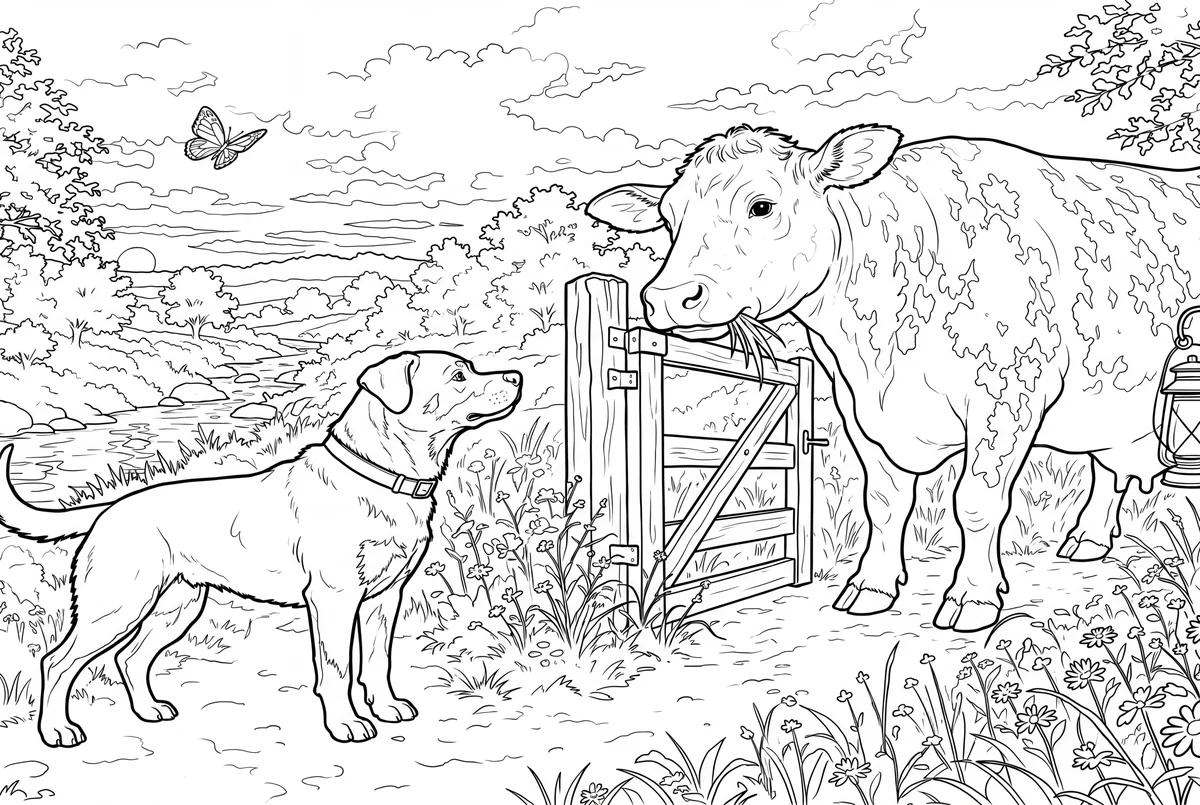
Colouring Pages
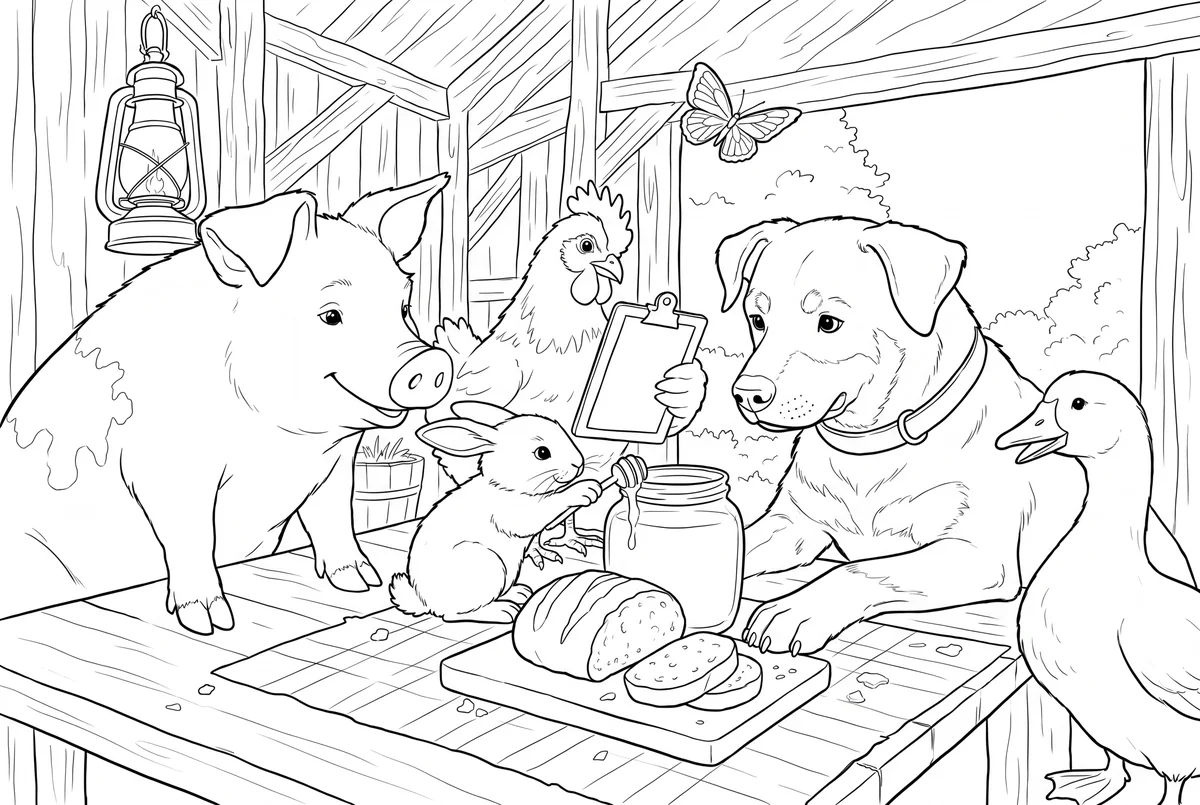
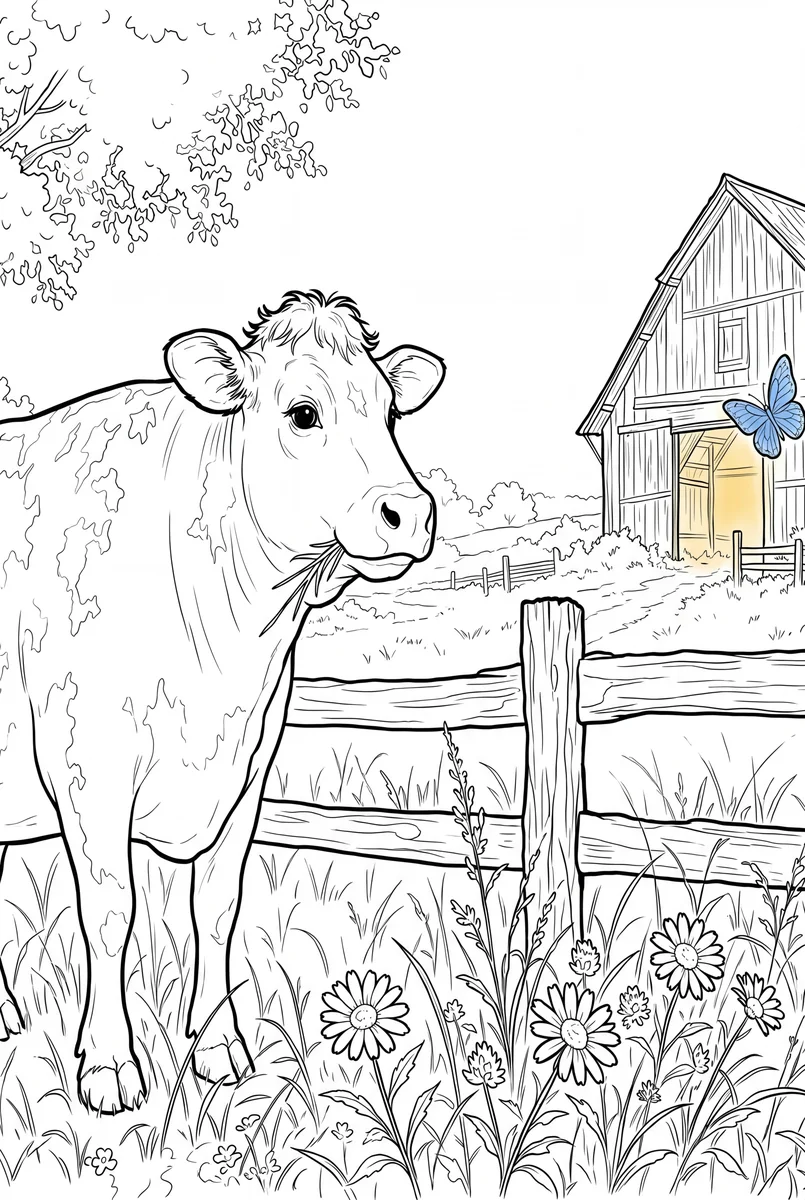
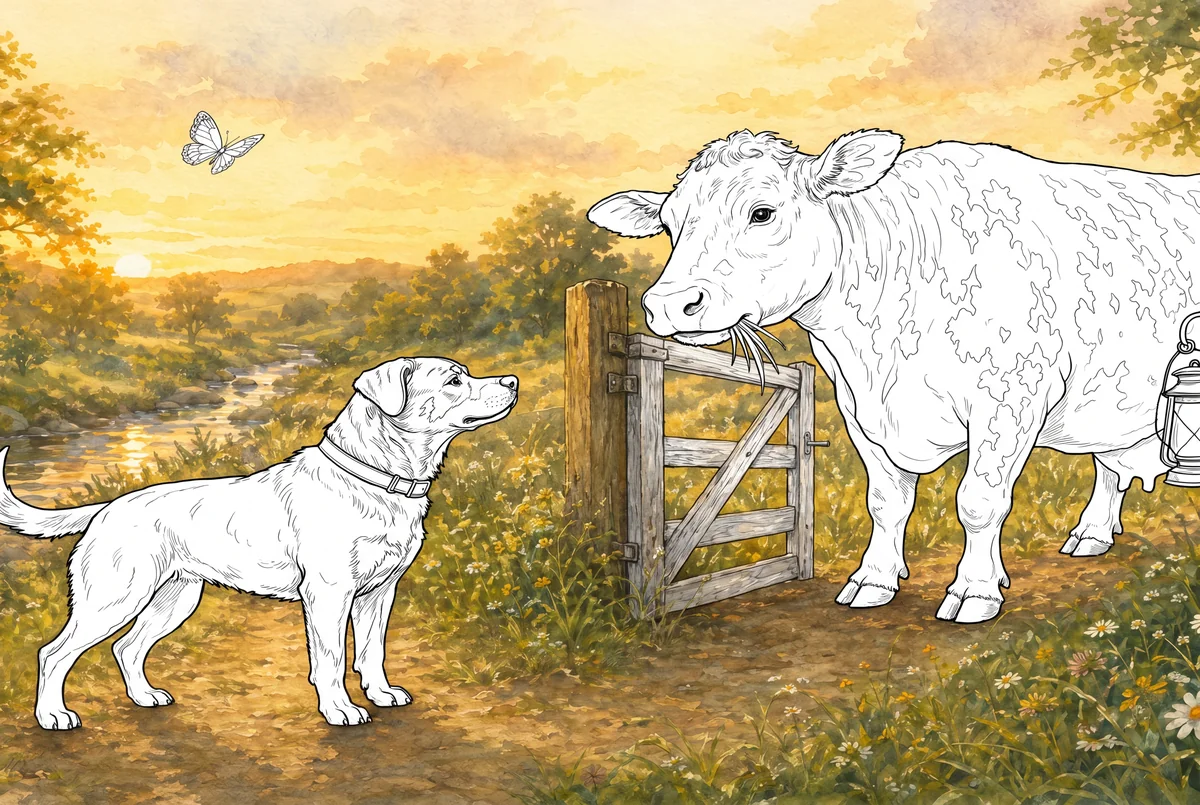
Zoe at the gate, Mable at her fence, the Old Barn at feast-time. Crayons or felt-tips both fine.
The Ladybird Hunt
The official 78-ladybird tracker. Tick them off as you find them. Don't peek at the answers!
Which Animal Are You?
Six quick questions. Are you more like calm Zoe, anxious Pip, organised Margot, or stubborn Chris?
The Butterfly Question
What does the blue butterfly mean? Nobody will tell you. Send us your idea and the best ideas will be featured on the site.
Merevale Creek Farm
Explore all eight farm locations and see what happens at each one.
Reader's Field Notes
A 16-page printable journal: tick the books, find the ladybirds, draw your favourite scene from each season.
Farm Games 🎮
Character Match
Flip the cards and find the matching pairs. Can you clear the board in under 12 moves?
Butterfly Catch
Blue butterflies are fluttering across the farm. Move your net over them before they fly away. You have 30 seconds!
Who Am I?
Read the clues and guess the character. Fewer clues used means more points — but be careful!
Read-Aloud Companion
- Reading-level guidance per chapter
- Conversation prompts (one per chapter)
- "What if your child gets stuck?" notes
- Sensitive themes & how to handle them
Field Notes & Classroom Pack
- Discussion starters — one per chapter for KS1 & KS2
- Bloom's Taxonomy question bank — all six levels, all twelve chapters
- Drama Activity Pack — twelve spoken language activities, one per chapter
- KS1 & KS2 National Curriculum word lists
- Reproducible worksheets
- KS1 & KS2 differentiation guidance
- PSHE lesson plans — one per chapter
Collection Development
- One-page series flyer
- Reading-order & standalone guidance
- Comparable titles (read-alikes)
- ISBN, format & ordering info
- Peters / Gardners distribution status
Press Kit
- Series fact sheet — format, age range, publication dates
- One-paragraph pitch
- Key quotes for editorial use
- Cover image & character art (on request)
- Interview Q&As — why a Rottweiler, why fables, the ladybird mechanic
- Contact details for review copies & additional assets
UK National Curriculum & PSHE alignment
The series is built from the ground up to support the PSHE Association Programme of Study for KS1 and KS2. Every chapter addresses one or more of the three PSHE strands — Relationships, Health and Wellbeing, and Living in the Wider World — making it a natural fit for both standalone PSHE lessons and whole-book study. The Learning Ladder mirrors Bloom's Taxonomy, escalating from recall (Chapters 1–4) through application (5–8) to analysis and evaluation (9–12).
| UK National Curriculum | Skill / Theme | PSHE strand | CASEL competency | Strongest in |
|---|---|---|---|---|
| KS1 / KS2 Reading — Comprehension | Prediction & inference | — | Self-awareness | Chs 9–12 |
| KS1 / KS2 Reading — Comprehension | Sequencing & narrative structure | — | Responsible decision-making | All chapters |
| KS1 / KS2 Reading — Comprehension & PSHE | Character traits & perspective-taking | Relationships | Social awareness | Chs 1, 10 |
| KS2 Reading — Comprehension | Setting, atmosphere, sensory writing | — | Self-management | Chs 1, 11 |
| KS2 Reading — Comprehension & PSHE | Cause & effect, problem-solving | Living in the Wider World | Responsible decision-making | Chs 3, 5, 8 |
| KS1 / KS2 & PSHE | Prejudice, fairness, belonging | Relationships | Relationship skills | Chs 1, 10, 12 |
| KS1 / KS2 Spoken Language & PSHE | Patience, observation, listening | Health & Wellbeing | Self-awareness | Chs 4, 9 |
| KS1 / KS2 & PSHE | Emotional regulation & resilience | Health & Wellbeing | Self-management | Chs 1, 11 |
| KS1 / KS2 & PSHE | Honesty, trust & consequences | Relationships | Responsible decision-making | Chs 2, 7 |
Every chapter is anchored to a single, named public-domain fable. Forty-eight unique fables across the four books, forming a complete classical-literacy primer, embedded invisibly.
The fables behind the stories
Each chapter is anchored to a public-domain fable retold with care for the way modern children read. The lesson is shown in the story — never delivered. 48 unique fables across the four books.
The Great Summer Jubilee — 12 days away in Chapter 1, counting down to the parade in Chapter 12.
Prejudice and belonging. Zoe is judged by appearance; her actions, not words, change every animal.
| Ch | Title | Source Fable | Lesson |
|---|---|---|---|
| 1 | The New Arrival | The Lion and the Mouse | No act of kindness, however small, is ever wasted |
| 2 | The Lost Lantern | The Boy Who Cried Wolf | Honesty builds trust |
| 3 | The Great Race | The Hare and the Tortoise | Patience and persistence beat haste and overconfidence |
| 4 | The Stubborn Gate | The Sun and the Wind | Gentleness and warmth achieve what force and pressure cannot |
| 5 | The Clever Solution | The Crow and the Pitcher | When the obvious approach fails, think differently |
| 6 | The Prize Stall | The Dog and His Reflection | Greed and envy cost more than they ever gain |
| 7 | The Sour Berries | The Fox and the Grapes | Pretending not to want what you can't have is easier than admitting failure |
| 8 | The Tug of War | The Bundle of Sticks | Together we are stronger than any of us alone |
| 9 | The Goose's Warning | The Goose That Laid the Golden Egg | Patience preserves what impatience destroys |
| 10 | The False Accusation | The Shepherd and the Wolf | Prejudice does not require evidence |
| 11 | The Great Storm | The Oak and the Reed | True strength is not the refusal to bend |
| 12 | The Jubilee Parade | The Sun and the Wind (reprise) | Leadership is not taken |
The Harvest Supper — 12 days away, while the creek level drops steadily each chapter.
Quiet courage and belonging. Mable notices what nobody else will and must act on what she knows before the farm's water supply fails.
| Ch | Title | Source Fable | Lesson |
|---|---|---|---|
| 1 | The Changing Creek | The Ant and the Grasshopper | Those who pay attention to small changes are better prepared than those too busy to notice |
| 2 | The Empty Nest | The Town Mouse and the Country Mouse | There is wisdom in knowing where you belong — but also risk in never questioning whether that place is changing |
| 3 | The Fallen Apples | The Milkmaid and Her Pail | Don't count your chickens — but don't assume what went wrong is worthless |
| 4 | The Muddy Path | The Dog in the Manger | Don't prevent others from using what you refuse to enjoy |
| 5 | The Borrowed Feathers | The Jay and the Peacock | Borrowed glory doesn't last — what you are without decoration is enough |
| 6 | The Silent Warning | The Wolf in Sheep's Clothing | A genuine warning should not be judged by who gives it |
| 7 | The Deep Pool | The Frog and the Ox | Don't puff yourself up to match something larger than you |
| 8 | The Shared Load | The Belly and the Members | Every part of a community depends on every other |
| 9 | The Bitter Harvest | The Farmer and the Viper | Kindness does not always protect you from consequences — but keep being kind |
| 10 | The Patient Stone | The Crow and the Eagle | Use your own gifts, not another's |
| 11 | The Last Clearing | The Mice in Council | It is easy to propose a solution — it takes courage to carry it out |
| 12 | The Harvest Supper | The Farmer and His Sons | The treasure is in the digging itself — the real harvest is belonging earned through work |
The Winter Gathering — preparations underway as winter deepens, with the farm's lantern supply threatened by ice, flooding and a missing carol singer.
Self-contained independence vs. belonging. Squashy helps without being asked; her arc is learning that belonging means choosing to stay.
| Ch | Title | Source Fable | Lesson |
|---|---|---|---|
| 1 | The Cold Morning | The Dog and the Wolf | Welcome is earned by making warmth available — not by forcing the door |
| 2 | The Empty Nest | The Ass and the Lapdog | Know your own gifts and work within them |
| 3 | The Frozen Bridge | The Peacock and the Crane | Appearances mislead — a plain truth from a plain source is worth more |
| 4 | The Warmest Stall | The Traveller and the Bear | A friend who stays when they could leave is a different kind entirely |
| 5 | The Broken Store | The Oak and the Reeds | There is a knowledge that only comes from having had no fixed shelter |
| 6 | The Long Night | Hercules and the Waggoner | Put your shoulder to the wheel first, then call for help |
| 7 | The Missing Carol | The Lark and Her Young Ones | What matters is not who might help — but who actually will |
| 8 | The Fox at the Feast | The Fox and the Crane | Hosting someone well means hosting them as they are |
| 9 | The Coldest Night | Androcles and the Lion | Small kindness in a quiet moment returns in the most desperate one |
| 10 | The Patient Stone | The Traveller and His Dog | Movement is not the same as progress |
| 11 | The Last Thing | The Quack Frog | The right knowledge applied from the right angle is everything |
| 12 | The Winter Gathering | The Ugly Duckling | She did not have to become something else — she had to find where what she already was belonged |
The Spring Fair — being organised below while Chewy watches from above, deciding whether to come down and be part of it.
Perspective vs. participation. Chewy can see everything from height but has never landed. Her arc is learning that living requires coming down.
| Ch | Title | Source Fable | Lesson |
|---|---|---|---|
| 1 | The First Landing | The Eagle and the Jackdaw | Know the difference between rising and arriving |
| 2 | The Old Name | The Fox and the Crow | Simple warmth offered honestly asks for nothing — and is harder to deflect |
| 3 | The Mud and the Sky | The Stag at the Pool | What you overlook in yourself may be exactly what is needed |
| 4 | The Spring Fair Announced | The Two Pots | Know your own nature — but do not mistake unfamiliarity for fragility |
| 5 | The Flooded Path | The Wolf and the Crane | Help freely given deserves acknowledgement |
| 6 | The Highest Branch | The Grasshopper and the Owl | Coming down is the harder skill — and the more necessary one |
| 7 | The Borrowed Light | The Bat, the Birds and the Beasts | Belonging to everywhere is belonging to nowhere |
| 8 | The Fox at the Fair | The Fox Without a Tail | When advice is framed to someone's advantage, examine the angle |
| 9 | The Spring Creek | The Dove and the Ant | What you save when it seems small returns when it matters most |
| 10 | The Ground Level | The Horse and the Ass | The small burden shared early is lighter than the one carried alone after |
| 11 | The Fair Day | The Cock and the Pearl | The greatest worth is often not in what looks most impressive from a distance |
| 12 | The Spring Awakening | The Swallow and the Other Birds | Living requires landing — even knowing the nets are there |
Librarian Resources
Merevale Creek Farm: a four-book seasonal series
Everything you need to assess, acquire, shelve and promote the series: reading-level data, comparable titles, series order, format details, and a printable one-page collection development sheet.
Series overview
A four-book seasonal chapter-book series set on Merevale Creek Farm. Each book follows Zoe, a Rottweiler, as she earns the trust of the farm animals through patient, consistent kindness. Every chapter retells a named public-domain fable; 48 unique fables across the series. The central theme of prejudice overcome by behaviour rather than argument is never stated directly; it is shown. This makes the series unusually strong for inference and discussion work.
Reading level & classification
6–9 years. Works as a read-aloud for ages 5+ and as independent reading from around age 8.
Approximately 7–8 years for independent reading. Vocabulary is deliberately stretching in places; context usually clarifies meaning, making it a strong inference text.
Fiction · Junior chapter books · Animals & farm life · Fable retellings · SEL / character education
Prejudice · Belonging · Trust · Patience · Fables · Farm animals · Dogs · Seasonal stories · Social-emotional learning
Series reading order
Each book is fully standalone: characters and setting are reintroduced in every volume. Sequential reading rewards returning readers with deepening character knowledge, but no book requires a previous one.
Comparable titles & read-alikes
For readers who enjoyed Merevale Creek Farm, or to assess where the series fits in your collection.
Farm animals, quiet wisdom, friendship earned over time. The tonal and thematic ancestor of the series.
An outsider animal earns a place on the farm through unusual behaviour. Similar age range and British countryside setting.
Dog protagonist, UK setting, same age range. Readers wanting more dog-centred chapter books.
For readers who want to explore the source material. Each Merevale chapter names its fable, ideal for paired reading.
Animal narrator, empathy and belonging themes, quiet moral depth. Slightly older readership (8–10) but strong thematic overlap.
Animal protagonist overcoming prejudice and fear through earned respect. Strong cross-cultural themes, similar chapter-book format.
Edition & format details: Book 1
| Detail | Information |
|---|---|
| Title | Zoe and the Great Summer Jubilee |
| Series | Merevale Creek Farm, Book 1 |
| Publisher | Merevale Publishing |
| Publication date | 2026 (exact date TBC) |
| Format: hardback | ISBN TBC · [size] · [page count] |
| Format: paperback | ISBN TBC · [size] · [page count] |
| Format: ebook | ISBN TBC |
| Illustrations | Full-colour chapter openers + spot art throughout |
| Word count | ~16,000 words · 12 chapters |
| Distribution (UK) | TBC; Peters / Gardners status to follow |
| Distribution (US / worldwide) | TBC |
ISBN and full bibliographic data will be confirmed ahead of publication. If you wish to be notified, please use the contact form below.
Display & promotion ideas
One-page collection development sheet
A single printable page summarising the series for acquisition committees, shelf labels and internal cataloguing notes. Includes: series overview, reading levels, comparable titles, thematic headings, and a shelf-talker panel.
Free to reproduce for internal library use. Please do not redistribute commercially.
Why Merevale Creek Farm exists
A four-book series, one farm, and a quiet idea: that the gentlest character on the page is often the one with the most to teach.
Merevale Creek Farm is a small British farm where, across four seasons, four protagonists learn the difference between being known and being seen. Zoe, the misunderstood Rottweiler, is the emotional anchor of the whole series. Mable, the cow who watches the creek. Squashy, the hedgehog who doesn't fit. Chewy, the owl who has only ever looked down.
Every chapter of every book is anchored to a public-domain fable retold with care for the way modern children read. Forty-eight unique fables across the series. The lesson is shown, never delivered.
The series is built for newly-confident readers (UK Years 2–4 / US Grades 1–3) and is designed to read as easily aloud at bedtime as it does in a Year 3 classroom. Large print. Soft edges. No frenetic pacing, no humiliation comedy, no cynicism, no true villains.
"If a scene feels loud, busy, or clever-at-someone's-expense, it is off-brand. Could this scene be read aloud at bedtime without raising a child's heart rate?"
Three simultaneous ticking clocks
Every great children's book has a visible ticking problem: a central tension the reader can feel counting down. Zoe and the Great Summer Jubilee runs three at once, in parallel.
The Great Summer Jubilee is coming. Every chapter counts down. At every turn, something threatens the celebration. The reader is always aware it could be lost, and that Zoe is at the centre of whether it happens or not.
Will the farm ever truly accept Zoe? Each chapter earns her one more ally: the slow accumulation mirrors social dynamics children recognise immediately. When Zoe leads the parade in Chapter 12, both external and internal clocks stop together: a double payoff.
From the moment readers learn the ladybird challenge, a third race begins: can they find all 78 before the book ends? As chapter numbers rise, so does the count and the difficulty. Chapter 12's twelve are the hardest of all. The hunt clock runs in parallel with Zoe's own journey.
Story + Visual Hunt + Emotional Payoff = books children return to, talk about, share, and grow up with. The re-readability built into the ladybird and butterfly mechanics is not an add-on; it is structural.
78 ladybirds per book
A triangular number, hidden in plain sight
One ladybird in Chapter 1. Two in Chapter 2. Three in Chapter 3. All the way to twelve in Chapter 12.
Total per book: 78. Total across the four books: 312. The early chapters are easy; the later ones are properly challenging; some are hidden in shadow, under hooves, or right by the spine.
Why 78?
Add up the numbers 1 through 12 and you always get 78:
This is called a triangular number, because if you arrange 78 dots into rows of 1, 2, 3... up to 12, they form a perfect triangle. Mathematicians have known about triangular numbers since ancient Greece.
There is also a shortcut. To find any triangular number, multiply the last number by the next one up, then halve it:
Sharp readers who spot the pattern, and work out the total before finishing the book, feel clever for exactly the right reasons. That is entirely intentional.
The seed-and-lead mechanic
Each Merevale Creek Farm book introduces one new character in a background role: present, meaningful, but unexplained. That character then leads the next book. This creates a chain of discovery that rewards returning readers and continuously expands the world.
Mable is seeded as a quiet presence at her fence post across the creek, barely explained, watching everything.
Squashy is seeded as a small hedgehog on the farm's edge, whose outside knowledge will matter more than anyone realises.
Chewy is seeded as an owl in the high branches, watching the farm for years from above, not yet ready to come down.
Zoe is present in every book; in Books 2–4 she steps back, enabling rather than leading. Her arc is always there; it simply shares the stage.
Each book is fully standalone: characters and setting are reintroduced in every volume. But readers who follow the series will know Mable, Squashy and Chewy long before they lead, which transforms the moment each one steps forward into something children feel they have been part of from the beginning.
Series at a glance
"True strength is gentle."
- Format: 4-book seasonal series
- Word count: ~16,000 words per book (64,000 series total)
- Chapters: 12 per book · 48 total
- Age range: 6–9 · UK Years 2–4 · US Grades 1–3
- Reading aloud: 5+ · Independent: from ~8
- Curriculum: KS1/KS2 aligned · CASEL-mapped
Every chapter is anchored to a public-domain Aesop fable, retold through the animals of Merevale Creek Farm. 48 unique fables across the series. The lesson is shown, never stated. Each book's protagonist is seeded quietly in the previous book before stepping forward as the lead.
- Charlotte's Web — E.B. White (tonal ancestor; farm, quiet wisdom, earned friendship)
- The Sheep-Pig — Dick King-Smith (outsider animal, British farm, same age range)
- The One and Only Ivan — Katherine Applegate (animal narrator, belonging, quiet moral depth)
- Varjak Paw — SF Said (prejudice overcome through earned respect)
Three layers, one quiet promise
A fable in every chapter
Each chapter is anchored to a public-domain fable, retold through Zoe and her farm. Forty-eight unique fables across the four books. The lesson is shown, never lectured.
78 ladybirds per book
One ladybird in Chapter 1, two in Chapter 2, building to twelve in Chapter 12. Seventy-eight in total, a triangular number. Sharp readers do the maths and feel clever for the right reasons.
The blue butterfly
A small Common Blue (Polyommatus icarus) appears in every full-page and half-page illustration. It is never explained. The meaning is the reader's to keep.
A misunderstood breed, a gentle hero
Rottweilers are one of the most stereotyped dog breeds in Britain. Casting one as the gentle, brave, deeply observant lead lets children meet prejudice, and watch it being undone, without ever being told what to think.
From the Brand Bible
Zoe never uses her strength unless it protects someone else. She listens more than she speaks. She helps without expecting thanks. She is, in a word, calm.
From Zoe's Behavioural Rules
The series promises something rare in modern children's publishing: warmth without sentimentality, and lessons without lectures. Bedtime-safe. Heart-rate steady.
From the Tone Check
Colouring Pages 🎨
Pick a picture below, choose your colours, and paint it on screen. Download your finished artwork or print the blank page to colour by hand.
The Butterfly Question
A small blue butterfly appears in every illustration in every book. It never speaks. It is never explained. What do you think it means? Send us your idea; the best ones will be shared on our website.
Share your idea
Your email is only used to let you know if your idea is featured. It will never be shared.
Featured ideas
"It means Zoe is never really alone."
Wherever she goes, the butterfly follows. It's like a quiet friend that only she can see.
Ellie
"It's kindness. You can't catch it but it always finds you."
Every time something kind happens in the story the butterfly appears. I checked.
Noah
"It's the farm remembering it's summer."
Butterflies only live for a little while. I think it means the story is happening right now and you have to pay attention.
Priya
"It's hope. A small one, but a real one."
My mum said butterflies mean change is coming. In the book, things always get better after you see it.
Finn
"It's watching. Like it knows what's going to happen next."
It's always there before something important. I think it's the most important character and nobody notices.
Amara
"It's the part of the story that belongs to you."
My teacher says some things in books are for the reader to decide. I think the butterfly is Zoe's secret and the reader's secret at the same time.
Isla
"It means everything is going to be okay."
Even in the hard chapters it's still there. It doesn't fix anything but it stays. That's what it means.
Sam
Which Merevale Animal Are You? 🐾
Are you calm like Zoe, organised like Margot, enthusiastic like Max, or loyal like Chris? Answer honestly. There are no wrong results.
Reader's Field Notes 📋
Fill in your notes for each book as you read it. Tick off your ladybirds, rate the chapters, and leave your mark on the story.
Games 🎮
Character Match
Flip the cards and find the matching pairs. Can you clear the board in under 12 moves?
Butterfly Catch
Blue butterflies are fluttering across the farm. Click them before they fly away. You have 30 seconds!
Who Am I?
Read the clues and guess the character. Fewer clues used means more points, but be careful!
Character Match
You did it!
Completed in moves.
Butterfly Catch
Time's up!
You caught butterflies!
Best score:
Who Am I?
Round 1 of 10Game over!
You scored out of 40.
Best score:
Sample Chapter
The gate at Merevale Creek Farm had stood for a very long time. It was old and crooked, patched with new wood where the old had rotted, and it creaked when the wind blew from the east. Every animal on the farm knew its voice. The long, low groan that meant someone was arriving. That morning, the gate groaned loudest of all, the animals stopped what they were doing and looked.
Zoe was large. That was the first thing anyone noticed. For most of the animals of Merevale Creek Farm, it was also the last thing they needed to know. She was a Rottweiler, black as a rain cloud, with patches of warm tan above her eyes and along her broad chest. Her paws were the size of Margot the Hen's best serving plates. Her tail was long and natural. When she walked through the gate that morning, the gravel crunched beneath her as if the lane itself was paying attention. She carried nothing with her except a quiet expression that gave nothing away.
The farmyard was not exactly welcoming. Mayo the Horse stood at the front of the assembled animals with the expression of someone who had been elected spokesman without being asked. He was tall and chestnut-brown, with a mane that he kept very neat, and he had opinions about most things. "We weren't told to expect a dog," he said, to no one in particular and to everyone at once. Margot the Hen clutched her clipboard — the one she kept for Jubilee preparations — then peered at Zoe over the top of it. "A large dog," she added, as if this were relevant information Mayo had carelessly omitted.
Pip the Rabbit, who was small and prone to worry, had retreated behind the water trough. Only his ears were visible, twitching like two nervous question marks above the rim. Mo the Goat said nothing at all. He was leaning against the fence post at the edge of the yard, chewing slowly, watching Zoe with the patient eyes of an animal who had seen many things come and go and had learned not to make up his mind in the first five minutes.
Zoe stood in the middle of it all and let them look. It was not the first time she had been looked at this way. It did not mean the conversation was over. It meant the conversation had not yet begun. That was different. That was something she could work with.
"Good morning," she said. Her voice was calm and unhurried, like the creek on a still day. "My name is Zoe. I've come to help with the Jubilee."
A silence settled over the farmyard — the particular kind of silence that is not peaceful at all, but full of unspoken things. "The Jubilee," said Mayo slowly, "requires a great many helpers." He paused. "It does not, as a rule, require dogs."
"Mayo," said Mo, from his fence post, "the Jubilee requires whatever it requires. Let the animal speak."
It was Pip who caused the trouble, though he hadn't meant to. An hour after Zoe's arrival, he had been fetching water from the creek. The bucket was large — far too large for a rabbit — and the path back up the bank was steep and slick with summer mud. Halfway up, his back foot went, the bucket lurched, and Pip went tumbling sideways into the reeds with a small, alarmed squeak.
Zoe arrived at the top of the bank to find Pip sitting in the mud, staring at his bucket with an expression of complete despair. "Are you hurt?" Zoe asked. "Only my dignity," said Pip, which was a very brave thing to say for an animal sitting in a muddy reed bed.
Zoe looked at the bucket, which had caught on a branch a little way downstream. She waded in, collected it, filled it at the clearest part of the water, and carried it back up the bank. She set it down beside Pip without a word about how easy it had been, or how small he was, or how he really ought to use a smaller bucket. She simply said: "Where does this need to go?"
Pip glanced at Zoe briefly, then bravely looked at her for the first time — not from behind a trough or through a curtain of reeds. He had expected teeth. He had expected something to be afraid of. Instead, he found a pair of calm brown eyes waiting patiently for directions.
"The barn," he said at last. "For Margot's flowers. She's doing the Jubilee garlands." "I'll carry it," said Zoe. "You've had a difficult morning."
That was the thing about Zoe's help. It did not make you feel smaller for needing it. It made you feel as though needing it had been a perfectly sensible thing to do.

Autumn came to Merevale Creek Farm the way it always did — quietly, then completely. There was a morning in early October when the light shifted without announcement, the air took on a different weight, and the orchard trees went copper at the tips between one dawn and the next. The creek, which had run all summer with a sound like a long, contented exhale, picked up something in its voice — a slight urgency, a quickening — that meant the autumn rains were not far behind.
Margot's clipboard appeared before anyone had finished their breakfast. This was how the farm knew, officially, that autumn had arrived: not by the turning of the leaves or the sharpening of the air, but by the presence of Margot's clipboard and the expression on Margot's face that said the Harvest Supper was twelve days away and there were one hundred and forty-seven things to be done and she had started on forty-three of them already and everyone else needed to catch up immediately.
The farm dispersed into activity with the particular energy of a community that knows exactly what it's doing and enjoys the knowing of it. Max bounded toward the orchard before anyone had asked him to. Mayo took up a position of authority near the barn door from which he could direct the barn clearance while technically not helping with it. Pip fetched the first water of the morning from the creek, which was his job and had been his job since before Zoe arrived, and he was very good at it and slightly proud of the fact.
At her pasture fence, Mable the Cow watched. She watched in the way she watched everything — without hurry, without announcement, with the kind of complete attention that most animals never quite managed because they were always moving toward the next thing. She watched the farm prepare for autumn, and the farm preparing for autumn was, she acknowledged, very fine. Then she turned and watched the creek.
She had been watching the creek for six autumns. She knew what it looked like at this time of day, in this quality of light. She knew where the water reached on the stepping stones in October. She knew the level that the water held against the third and fourth stones from the left bank. This morning it fell short. Not dramatically. Not enough that anyone rushing past with a bucket would think twice. But Mable had stood at this bank in six autumns, and the water this morning was lower than it should be — by a measurable and specific amount that she could feel in the difference between what she was seeing and what she knew.
She said nothing. She was not certain enough yet to say something, and Mable did not believe in speaking before she was certain. She would watch for another day, and then another. She would walk the bank further upstream and look at it from different angles. She would listen to the sound of it, which was also different — thinner, quieter, not quite right.
The gate at the end of the lane creaked once as Pip came through it with his water bucket. The autumn sound of it: sharper than summer, the iron cold in the cool air.
Nobody had asked Squashy to be there. That was the usual arrangement.
She was small enough that the farm's larger animals often forgot she existed between sightings, and she had never done anything to remedy this. She appeared when she appeared, from the hedgerow gap behind the water trough, from the narrow space between the barn wall and the cold frame, from the gap under the gate where the wood had lifted, and then she disappeared again, leaving no particular impression except the faint sense, in the animal who had seen her, that something small and useful had just happened.
This morning she was at Badger Bridge.
The old stone crossing sat lower than usual; the water had risen overnight, and the skim of ice that had formed across the upstream side had not yet broken. Squashy stood at the near edge for a long time, looking at the stones beneath the surface. She knew every one. She knew which ones were flat and which ones tilted; she knew where the current pulled harder than it looked, and where the stone nearest the far bank had a crack along the lower edge that made it uncertain in frost.
She crossed carefully. She always crossed carefully. Then she went to find the farm's first lantern before anyone else had thought to look.
The Winter Gathering was six weeks away. There was a great deal to be done. And nobody had asked her to help with any of it, which was, as she had decided long ago, no reason not to.
Chewy had been watching Merevale Creek Farm for three years from the rafter of the old elm at the top of the slope, and she knew it better than any animal who lived there.
She knew the exact time the barn door opened in the morning. She knew the path Margot took between the farmyard and the Jubilee meadow, and the three small detours Margot made that she probably did not know she made. She knew where the creek ran faster than it looked in spring, and where the bridge hummed at a certain wind angle, and which corner of the upper field stayed driest when the rains came. She had watched Zoe arrive, three summers ago, and had seen everything that happened next.
She had never once landed in the farmyard.
It had not seemed necessary. She had her perch. She had the whole farm spread below her in perfect silence. She could see farther than any of them, and she had decided, some time ago, that this was the better arrangement.
On the first morning of spring, a jackdaw landed on the rafter beside her and asked what she was looking at.
"Everything," said Chewy.
The jackdaw considered this. "What are you doing about it?"
Chewy did not have an answer. She had never needed one before.
Teacher Resources 📚
Select a book to access its classroom resources — chapter guides, drama activities, PSHE lesson plans, worksheets, and curriculum mapping.
KS1 differentiation notes
Focus on Chapters 1–4. Pre-teach five words per chapter. Use the feelings check-in before each session. Paired listening works well.
All twelve chapters work as read-aloud. Pause after each chapter ending and ask one question. Short sentences in later chapters are suitable for shared reading.
Year 2 readers who are building confidence can access Chapters 1–6 independently. Use the KS1 word lists for pre-reading vocabulary work. Discussion starters in the Read-Aloud Companion support comprehension after each chapter.
Farm vocabulary is largely concrete and contextualised, making meaning accessible without prior knowledge. The fable tradition provides cultural touchpoints across many heritages. The discussion starters in the Read-Aloud Companion work well as spoken language activities before any written response.
Using this book at KS1
Best use at KS1: read-aloud. The book is designed to read as easily at bedtime as in a Year 1 classroom. Vocabulary is deliberately stretching — context usually clarifies meaning, making this a strong inference-building text even for younger listeners.
Interest age: 5+ for read-aloud · Independent reading: from ~8 · Reading age: ~7–8
The first four chapters are the most accessible. Chapters 1–4 address concrete, visible lessons (first impressions, honesty, different kinds of ability, patience) before the book moves to more complex social dynamics in Chapters 5–8 (being underestimated, appearance versus reality, self-deception, teamwork) and inner-world themes in Chapters 9–12 (listening to wisdom, injustice and dignity, resilience, belonging and redemption).
Read-Aloud Companion
The Read-Aloud Companion is designed for parents and carers but works equally well for KS1 teachers reading aloud: conversation starters, guidance on sensitive themes, and tips for when a child gets stuck.
KS1 Word Lists — Years 1 & 2
Statutory word lists from the National Curriculum (England) 2014. Words highlighted in green appear in Zoe and the Great Summer Jubilee.
Source: NC 2014 Appendix 1. Free to reproduce for classroom use.
KS2 differentiation notes
All twelve chapters are accessible as class reader or guided reading. Use the KS2 word lists for pre-reading vocabulary work and discussion starters to support comprehension after each chapter. Bloom's Remember and Understand questions are available in the question bank below.
Chapters 9–12 are particularly strong for inference and character analysis. Use Bloom's Apply and Analyse questions from the question bank to stretch thinking. The fable texts embedded in each chapter work well for paired reading and comparative discussion.
Bloom's Evaluate and Create questions in the question bank are well-suited to greater depth readers. Chapters 7, 10, and 12 carry the most complex moral weight and reward close reading for subtext, implication, and authorial intent. Drama activities — including Conscience Alley and Forum Theatre — provide structured frameworks for higher-order spoken response. Download the Drama Activity Pack below.
Farm vocabulary is largely concrete and contextualised, making meaning accessible without prior knowledge. The fable tradition provides cultural touchpoints across many heritages. Drama activities — including hot-seating and conscience alley — build spoken language before written response. Download the Drama Activity Pack below.
Using this book at KS2
Best use at KS2: class reader or guided reading. The twelve-chapter structure maps cleanly to a half-term unit. Each chapter is self-contained enough for a single guided reading session, while the cumulative arc rewards whole-book study.
Interest age: 6–9 · Independent reading: from ~8 · Reading age: ~7–8 · Best fit: Years 3–4 as class reader; Years 4–6 for independent and guided work
The fable anchor in each chapter makes the book particularly strong for inference, theme, and authorial intent work. Chapters 9–12 carry the most complex moral weight and are well-suited to Bloom's Analyse and Evaluate questions.
KS2 discussion starters — all chapters
One question per chapter to open class or guided reading discussion.
| Ch 1 · The New Arrival | What does it feel like to be judged before anyone knows you? |
| Ch 2 · The Lost Lantern | What makes it hard to tell the truth after getting something wrong? |
| Ch 3 · The Great Race | What is the difference between looking slow and being careful? |
| Ch 4 · The Stubborn Gate | Can you think of a time when being patient worked better than pushing harder? |
| Ch 5 · The Clever Solution | When is being small or different actually an advantage? |
| Ch 6 · The Prize Stall | What is the difference between something that looks good and something that is good? |
| Ch 7 · The Sour Berries | Why is it sometimes hard to admit when we cannot do something? |
| Ch 8 · The Tug of War | What changed when you worked together rather than just tried harder? |
| Ch 9 · The Goose's Warning | What makes it hard to listen when you have already made up your mind? |
| Ch 10 · The False Accusation | Why might saying nothing sometimes be more powerful than arguing back? |
| Ch 11 · The Great Storm | What does it really mean to be strong? |
| Ch 12 · The Jubilee Parade | What made Mayo's step backward the most important thing he did in the whole story? |
Bloom's Taxonomy Question Bank
One question per chapter across all six cognitive levels. Select a level to view all twelve chapter questions.
Recall and recognition
| Ch 1 · The New Arrival | What does Zoe do when she walks into the farmyard for the first time? |
| Ch 2 · The Lost Lantern | What happens to the lantern, and who is involved? |
| Ch 3 · The Great Race | Who takes part in the race, and who wins? |
| Ch 4 · The Stubborn Gate | What is wrong with the gate, and who tries to fix it? |
| Ch 5 · The Clever Solution | What problem needs solving, and who solves it? |
| Ch 6 · The Prize Stall | What is on the prize stall, and what does the character choose? |
| Ch 7 · The Sour Berries | What are the sour berries, and what does the character say about them? |
| Ch 8 · The Tug of War | Who are the two sides, and what happens? |
| Ch 9 · The Goose's Warning | What does the goose warn the others about? |
| Ch 10 · The False Accusation | What is Zoe accused of, and what does she do in response? |
| Ch 11 · The Great Storm | What happens during the storm, and who acts first? |
| Ch 12 · The Jubilee Parade | What happens at the parade, and what does Mayo do? |
Explanation and interpretation
| Ch 1 · The New Arrival | Why are the farm animals afraid of Zoe before she has said or done anything? |
| Ch 2 · The Lost Lantern | Why does the character find it hard to tell the truth after the lantern is lost? |
| Ch 3 · The Great Race | Why does the winner succeed, even though they are not the fastest? |
| Ch 4 · The Stubborn Gate | Why does patience work better than force when dealing with the stubborn gate? |
| Ch 5 · The Clever Solution | Why is the least expected character able to solve the problem? |
| Ch 6 · The Prize Stall | Explain why choosing the most impressive-looking prize might be a mistake. |
| Ch 7 · The Sour Berries | Why does the character decide they did not want the berries anyway? |
| Ch 8 · The Tug of War | Explain why the animals only succeed when they work together. |
| Ch 9 · The Goose's Warning | Why do the animals find it hard to listen to the goose's warning? |
| Ch 10 · The False Accusation | Why does Zoe choose to say nothing when she is falsely accused? |
| Ch 11 · The Great Storm | Explain what Zoe does during the storm and why it matters. |
| Ch 12 · The Jubilee Parade | Explain what Mayo's step backward means and why it is significant. |
Using knowledge in new contexts
| Ch 1 · The New Arrival | How might the story have been different if Zoe had spoken up immediately when the animals pulled back? |
| Ch 2 · The Lost Lantern | Think of a time when telling the truth was difficult. How does that compare to what happens in this chapter? |
| Ch 3 · The Great Race | How could you use the lesson of this chapter to help someone who always feels they finish last? |
| Ch 4 · The Stubborn Gate | Where else in life might patience work better than pushing harder? Give an example outside the story. |
| Ch 5 · The Clever Solution | Can you think of a situation where a surprising person solved a problem? What made it possible? |
| Ch 6 · The Prize Stall | How would you decide between something that looked impressive and something less obvious but better? |
| Ch 7 · The Sour Berries | Have you ever pretended you did not want something after you could not have it? How does that compare to this chapter? |
| Ch 8 · The Tug of War | Describe a task that would be impossible alone but achievable as a group. What makes the difference? |
| Ch 9 · The Goose's Warning | What would you do if you had important information but knew people might not listen? How does this connect to the goose? |
| Ch 10 · The False Accusation | If you were falsely accused of something, would you react the way Zoe does? What would be the hardest part? |
| Ch 11 · The Great Storm | How would you behave if you were scared but knew someone needed help? What does this chapter suggest about courage? |
| Ch 12 · The Jubilee Parade | Think of a real situation where someone admitted they were wrong in public. How does that compare to Mayo's moment? |
Breaking down, comparing, examining structure
| Ch 1 · The New Arrival | Compare how Mayo and Pip react to Zoe's arrival. What does each reaction tell us about their character? |
| Ch 2 · The Lost Lantern | How does the author build tension before the truth about the lantern is revealed? |
| Ch 3 · The Great Race | How does the fable of the Tortoise and the Hare connect to this chapter? What is the same and what is different? |
| Ch 4 · The Stubborn Gate | Analyse the difference between stubbornness and patience in this chapter. Are they always opposites? |
| Ch 5 · The Clever Solution | Why might the other animals have overlooked the character who solves the problem? What assumptions did they make? |
| Ch 6 · The Prize Stall | Analyse the difference between what looks valuable and what is actually valuable. What makes this a hard distinction? |
| Ch 7 · The Sour Berries | How does the character's behaviour show self-deception? What clues does the author give? |
| Ch 8 · The Tug of War | How does the dynamic between the animals change across this chapter? What shifts the outcome? |
| Ch 9 · The Goose's Warning | Compare the goose's warning to the fable of the Farmer and the Viper. What is the author saying about trust? |
| Ch 10 · The False Accusation | Analyse Zoe's decision to stay silent. Is it strength or resignation? What evidence supports each reading? |
| Ch 11 · The Great Storm | How does the storm function as more than just a weather event? What does it represent? |
| Ch 12 · The Jubilee Parade | Analyse Mayo's final action. Why does the author choose this as the resolution rather than a speech or apology? |
Making judgements and justifying them
| Ch 1 · The New Arrival | Was it fair for the farm animals to be afraid of Zoe? Justify your answer using evidence from the chapter. |
| Ch 2 · The Lost Lantern | Do you think the character made the right decision about the lantern? What would you have done differently, and why? |
| Ch 3 · The Great Race | Was the race a fair test of ability? Evaluate what it actually measures compared to what the animals assumed. |
| Ch 4 · The Stubborn Gate | Is patience always a virtue, or can it sometimes be a weakness? Use this chapter to support your argument. |
| Ch 5 · The Clever Solution | Was it right for the animals to underestimate the character who solved the problem? What should they have done differently? |
| Ch 6 · The Prize Stall | Evaluate the choice made at the prize stall. Was it a mistake, or was there a reason it made sense at the time? |
| Ch 7 · The Sour Berries | How honest is the character being with themselves? Is self-deception ever understandable? |
| Ch 8 · The Tug of War | Could the animals have found a different solution? Evaluate whether teamwork was the only answer. |
| Ch 9 · The Goose's Warning | Was the goose right to give the warning? Evaluate whether the other animals' response was reasonable. |
| Ch 10 · The False Accusation | Was Zoe's silence the right response? Evaluate the advantages and disadvantages of staying quiet when accused. |
| Ch 11 · The Great Storm | Who shows the most courage in this chapter? Justify your answer with evidence. |
| Ch 12 · The Jubilee Parade | Is Mayo's gesture enough? Evaluate whether one act can undo a pattern of behaviour. |
Producing something new
| Ch 1 · The New Arrival | Write the diary entry Zoe might write on her first night at Merevale Creek Farm. |
| Ch 2 · The Lost Lantern | Write the scene where the truth about the lantern comes out — from the perspective of the character who lost it. |
| Ch 3 · The Great Race | Design a different kind of race that gives every animal a fair chance. Describe the rules and why you chose them. |
| Ch 4 · The Stubborn Gate | Write a short story where impatience makes things worse and patience eventually solves the problem. |
| Ch 5 · The Clever Solution | Create a profile for an unexpected character who excels at something no one has noticed. What is their hidden strength? |
| Ch 6 · The Prize Stall | Design your own prize stall with three items — one that looks impressive, one that is actually useful, and one that is both. Justify each choice. |
| Ch 7 · The Sour Berries | Write the internal monologue of a character pretending they did not want something they really did want. |
| Ch 8 · The Tug of War | Create a set of rules for working as a team, based on what the animals learn in this chapter. |
| Ch 9 · The Goose's Warning | Write the goose's warning as a formal letter, a spoken announcement, and a text message. How does the tone change? |
| Ch 10 · The False Accusation | Write an alternative ending where Zoe decides to speak up rather than stay silent. What happens? |
| Ch 11 · The Great Storm | Write a weather report for the storm — but make it also describe the emotional atmosphere on the farm. |
| Ch 12 · The Jubilee Parade | Design the Jubilee Parade programme as it would appear to an outsider, then annotate it with what the farm animals would actually be thinking. |
Drama Activity Pack
Twelve drama activities — one per chapter. Each is mapped to the KS1/KS2 Spoken Language statutory requirements and needs no equipment. Use as a standalone activity or alongside the PSHE lesson plans.
KS2 Word Lists — Years 3–4 & 5–6
Statutory word lists from the National Curriculum (England) 2014. Words highlighted in green appear in Zoe and the Great Summer Jubilee.
Source: NC 2014 Appendix 1. Free to reproduce for classroom use.
Chapter overview
Each chapter is anchored to a retold Aesop fable. The grid below shows the fable, PSHE strand, drama activity, and key discussion question for each chapter.
The New Arrival
The Lost Lantern
The Great Race
The Stubborn Gate
The Clever Solution
The Prize Stall
The Sour Berries
The Tug of War
The Goose's Warning
The False Accusation
The Great Storm
The Jubilee Parade
PSHE Association Quality Mark
The twelve lesson plans below are formatted to the PSHE Association's Programme of Study 2026 and have been submitted for Quality Mark assessment. Chapters 1 and 10 are the primary submissions.
Each plan includes: PSHE strand mapping, fable anchor, learning objectives, full lesson structure, differentiation, assessment opportunities, and sensitive teaching notes. Free to download and reproduce for classroom use.
Twelve full PSHE-format lesson plans, one per chapter, mapped to the PSHE Association Programme of Study 2026. Each includes learning objectives, structured lesson plan, differentiation, assessment opportunities, and sensitive teaching notes.
Chapters 1 and 10 have been submitted for PSHE Association Quality Mark assessment. All twelve are free to download and reproduce for classroom use.
The Lost Lantern
The Stubborn Gate
The Clever Solution
The Tug of War
The Goose's Warning
The Great Storm
KS1 / KS2 & CASEL alignment grid
| Skill / Theme | UK Curriculum | CASEL | Chapters |
|---|---|---|---|
| Prediction & inference | KS1/KS2 Reading: Comprehension | Self-Awareness | 1, 2, 5 |
| Character analysis | KS2 Reading: Comprehension | Social Awareness | All |
| Authorial intent & language choice | KS2 Reading: Comprehension | Self-Awareness | 3, 6, 10 |
| Sequencing & narrative structure | KS1 Reading: Comprehension | Responsible Decision-Making | All |
| Vocabulary in context | KS1/KS2 Reading: Word Reading | Self-Management | All |
| Spoken discussion & debate | KS2 Speaking & Listening | Relationship Skills | 5, 8, 11, 12 |
| Persuasive writing (Worksheet 3) | KS2 Writing: Composition | Responsible Decision-Making | 12 |
| Prejudice & fairness | KS1/KS2 PSHE | Social Awareness | 1, 10 |
| Empathy & perspective-taking | KS1/KS2 PSHE | Social Awareness | 2, 6, 9 |
| Resilience & self-reliance | KS2 PSHE | Self-Management | 4, 8, 11 |
| Courage & moral decision-making | KS2 PSHE | Responsible Decision-Making | 4, 8, 10 |
| Classical literacy: fable tradition | KS2 Reading: wider reading | N/A | All |
| Philosophy for Children (P4C) | KS2 Speaking & Listening | Responsible Decision-Making | 9, 10, 11, 12 |
| Numeracy link: triangular numbers | KS1/KS2 Maths | N/A | Ladybird hunt: 1+2+…+12 = 78 |
| HOTS Question Cubes (all six faces) | KS1/KS2 Reading; Speaking & Listening | All five CASEL competencies | All |
PSHE Association Programme of Study — Strand Mapping
Book 1 mapped against the three PSHE Association strands. Full PSHE-format lesson plans available on the PSHE Lesson Plans tab.
| Chapter | Primary strand | Secondary strand | Key outcome |
|---|---|---|---|
| Ch 1 — The New Arrival | Relationships (R) | Health & Wellbeing (H) | Prejudice based on appearance; belonging; self-regulation under scrutiny |
| Ch 2 — The Lost Lantern | Relationships (R) | Health & Wellbeing (H) | Honesty and trust; courage to admit a mistake; community impact of dishonesty |
| Ch 3 — The Great Race | Health & Wellbeing (H) | Relationships (R) | Different kinds of ability; managing overconfidence; resilience |
| Ch 4 — The Stubborn Gate | Health & Wellbeing (H) | Relationships (R) | Patience as active strength; self-regulation; listening to different approaches |
| Ch 5 — The Clever Solution | Relationships (R) | Health & Wellbeing (H) | Inclusion as practical wisdom; recognising hidden strengths; contribution |
| Ch 6 — The Prize Stall | Health & Wellbeing (H) | Living in the Wider World (L) | Values vs appearances; delayed gratification; real vs perceived worth |
| Ch 7 — The Sour Berries | Health & Wellbeing (H) | Relationships (R) | Managing pride; self-honesty; the cost of pretending |
| Ch 8 — The Tug of War | Relationships (R) | Living in the Wider World (L) | Cooperation; calm leadership; collective effort |
| Ch 9 — The Goose's Warning | Health & Wellbeing (H) | Relationships (R) | Impulse control; real listening; responsibility for warned consequences |
| Ch 10 — The False Accusation | Relationships (R) | Health & Wellbeing (H) | Prejudice; fairness; self-regulation under injustice; silence as strength |
| Ch 11 — The Great Storm | Health & Wellbeing (H) | Relationships (R) | Resilience; different expressions of courage; community in crisis |
| Ch 12 — The Jubilee Parade | Relationships (R) | Health & Wellbeing (H) | Belonging vs tolerance; public recognition; moral courage |
One child sits as Zoe on her first morning at the farm. The class asks questions in character as the other animals.
Try asking: How did it feel walking into that farmyard? Why didn't you argue back? What made you decide to help Pip?
💬 Has anyone ever felt like the new animal? What did it feel like to be looked at that way?
The class forms two lines. Max walks slowly between them. One side whispers reasons to speak up. The other whispers doubts.
Speak-up side: "They'll believe you this time." / Doubt side: "They won't listen — it'll only make it worse."
💬 What makes it hard to tell the truth after you've already got something wrong?
Two children act the moment Oscar turns around the boggy patch while Mayo charges straight in. Freeze. The class asks each: what are you thinking?
Ask Oscar: why did you walk the course this morning? Ask Mayo: did you know about the firm ground to the left?
💬 What is the difference between looking slow and being careful?
In pairs: one plays Mayo, one plays Zoe who must persuade him that patience will work — without arguing. Swap roles.
Challenge: Zoe cannot disagree directly. She can only ask questions or suggest.
💬 Can you think of a time when being patient worked better than pushing harder?
Groups must solve a stuck problem using the smallest or least expected member — like Calypso. Largest members must try first and fail.
Rule: the largest members of the group must try first — and fail — before the group reconsiders.
💬 When is being small or different actually an advantage?
One child sits as Rufus after the feast — rosette propped against his cup, honey long gone. The class questions him about his choice.
Try asking: Do you regret it? What does the rosette give you that the honey couldn't? If you could choose again, what would you pick?
💬 What is the difference between something that looks good and something that is good?
Mayo walks between two lines. One side whispers the honest thought. The other whispers the easier story.
Honest: "Just admit you couldn't reach them." / Easier: "Say the lower ones were better. Nobody needs to know."
💬 Why is it sometimes hard to admit when we can't do something?
Two rounds of tug of war. Round 1: no coordination. Round 2: appoint a Zoe to position everyone calmly and give one signal. Compare.
The Zoe role: no shouting — must position and instruct calmly before the round begins.
💬 What changed when you worked together rather than just harder?
In pairs: June tries to stop Rufus disturbing the wasps; Rufus is determined to act. June must persuade without raising her voice. Rufus must justify without being rude.
Perform for the class. Which pairs made it most convincing?
💬 What makes it hard to listen when you've already made up your mind?
Act out the wreath scene. At any moment a child calls "Freeze!" and steps in as Zoe to try a different response. What happens when she defends herself? When she stays silent?
Try at least three different Zoe responses. Compare what happens each time.
💬 Why might saying nothing sometimes be more powerful than explaining yourself?
Three frozen moments: (1) Mayo shouting "Stand firm!" (2) Zoe moving low through the storm. (3) Calypso on the maypole. Class asks each: what are you thinking? Are you scared?
Each character thinks they are doing the right thing. That is the point.
💬 What does it really mean to be strong?
Groups perform the moment Mayo steps back and says: "I think it should be Zoe." Each group must find a different way — reluctantly, proudly, quietly, with a long pause before.
Same six words. Entirely different meaning depending on how they are said.
💬 What made Mayo's step backwards the most important thing he did in the whole story?
CASEL Framework — Book 1
The five CASEL competencies map across all twelve chapters of Zoe and the Great Summer Jubilee. The table below shows which competency is most prominently addressed in each chapter, with the primary chapter for each competency highlighted.
| CASEL Competency | Description | Primary chapters | Key moment |
|---|---|---|---|
| Self-Awareness | Recognising one's own emotions, values and strengths | Chs 3, 7 | Ch 3: Oscar walks the course, assesses his own strengths honestly, and competes within his actual capabilities rather than on Mayo's terms. Ch 7: Mayo realises he cannot reach the berries and must acknowledge it, rather than pretend. |
| Self-Management | Regulating emotions, setting goals, showing resilience | Chs 4, 11 | Ch 4: Zoe waits patiently with the stubborn gate while others force and fail. Ch 11: During the storm she moves low and quietly while others stand rigid and are overwhelmed. |
| Social Awareness | Empathy, understanding diverse perspectives | Chs 1, 10 | Ch 1: The farm animals judge Zoe before she has said or done anything — a vivid illustration of how prejudice operates without evidence. Ch 10: Zoe stays silent when falsely accused, understanding that arguing back will change nothing in that moment. |
| Relationship Skills | Communication, teamwork, resolving conflict | Chs 2, 6, 8 | Ch 2: Max must tell the truth about the lantern, rebuilding trust after a failure. Ch 6: Rufus chooses appearance over substance and lives with the consequences. Ch 8: The tug of war is only won when the animals coordinate rather than simply try harder. |
| Responsible Decision-Making | Ethical choices, considering consequences | Chs 5, 9, 12 | Ch 5: Calypso's unexpected solution works because someone chose to look differently at the problem. Ch 9: June's warning goes unheeded — the cost of choosing not to listen. Ch 12: Mayo steps backward at the parade, choosing to give credit rather than take it. |
Chapter-by-chapter CASEL mapping
| Ch 1 · The New Arrival | Social Awareness | Understanding how prejudice forms before any evidence exists |
| Ch 2 · The Lost Lantern | Relationship Skills | Honesty under pressure; how trust is rebuilt after failure |
| Ch 3 · The Great Race | Self-Awareness | Oscar knows his own strengths and competes within his actual capabilities rather than on Mayo's terms |
| Ch 4 · The Stubborn Gate | Self-Management | Patience as a choice; regulating frustration in a difficult situation |
| Ch 5 · The Clever Solution | Responsible Decision-Making | Choosing the right approach over the obvious one; valuing unexpected contributions |
| Ch 6 · The Prize Stall | Relationship Skills | Appearance versus genuine value; the consequences of envy |
| Ch 7 · The Sour Berries | Self-Awareness | Recognising self-deception; honesty with oneself as a form of courage |
| Ch 8 · The Tug of War | Relationship Skills | Collective strength; the difference between working hard and working together |
| Ch 9 · The Goose's Warning | Responsible Decision-Making | Listening to wisdom; the cost of ignoring a well-founded warning |
| Ch 10 · The False Accusation | Social Awareness | Integrity without an audience; dignity in the face of injustice |
| Ch 11 · The Great Storm | Self-Management | Resilience under pressure; true strength as flexibility, not rigidity |
| Ch 12 · The Jubilee Parade | Responsible Decision-Making | Leadership as a choice to step back; belonging earned rather than assigned |
CASEL · Curriculum · PSHE — three-way connection
Each CASEL competency maps to specific UK National Curriculum skills and PSHE strands, making it straightforward to justify using this book within a structured lesson plan.
| CASEL Competency | Curriculum skill developed | PSHE strand |
|---|---|---|
| Self-Awareness | Prediction & inference — KS1 / KS2 Reading — Comprehension | — |
| Patience, observation, listening — KS2 & PSHE | Health & Wellbeing | |
| Self-Management | Setting, atmosphere, sensory writing — KS2 Reading — Comprehension | — |
| Emotional regulation & resilience — KS1 / KS2 & PSHE | Health & Wellbeing | |
| Social Awareness | Character traits & perspective-taking — KS1 / KS2 & PSHE | Relationships |
| Relationship Skills | Prejudice, fairness, belonging — KS1 / KS2 & PSHE | Relationships |
| Responsible Decision-Making | Sequencing & narrative structure — KS1 / KS2 Reading — Comprehension | — |
| Cause & effect, problem-solving — KS1 / KS2 & PSHE | Living in the Wider World | |
| Honesty, trust & consequences — KS1 / KS2 & PSHE | Relationships |
Mable and the Merevale Creek Mystery
Resources for Book 2 are currently in development and will be added when the book is published (2026).
The full classroom pack will include chapter-by-chapter discussion prompts, drama activities, PSHE lesson plans, vocabulary lists, worksheets, and CASEL alignment — all in the same format as Book 1.
Squashy and the Winter Gathering
Resources for Book 3 are currently in development and will be added when the book is published (2027).
The full classroom pack will include chapter-by-chapter discussion prompts, drama activities, PSHE lesson plans, vocabulary lists, worksheets, and CASEL alignment.
Chewy and the Spring Awakening
Resources for Book 4 are currently in development and will be added when the book is published (2027).
The full classroom pack will include chapter-by-chapter discussion prompts, drama activities, PSHE lesson plans, vocabulary lists, worksheets, and CASEL alignment.
Read-Aloud Companion
Book 1 · Zoe and the Great Summer Jubilee
Everything you need to read Book 1 aloud with confidence: reading-level notes, conversation starters for each chapter, guidance on the sensitive themes, and what to do when a child gets stuck.
Before you begin
Book 1 is designed to be read in twelve sessions — one chapter per sitting. Each chapter is roughly 900–1,100 words and takes 8–12 minutes to read aloud at a comfortable pace. There is no cliffhanger pressure. Each chapter resolves cleanly, making it easy to stop and talk.
Reading age: 6–9 years for read-aloud; independent reading from around age 8. The vocabulary is deliberately slightly above independent reading level — reading aloud closes that gap and models fluency at the same time.
The gate creak: every chapter begins with the farm gate. It creaks differently each time. You don't need to point this out — children who notice it feel clever. Children who don't will still enjoy the story.
Sensitive themes & how to handle them
Zoe is a Rottweiler. Most animals on the farm are afraid of her before she has said or done anything. This is handled gently and without anger — Zoe never complains about it. If a child asks why the animals are scared, the honest answer is: "They've heard things about Rottweilers that aren't true about Zoe. It takes time to find out the truth about someone."
Mayo implies Zoe damaged the wreath. She didn't. She says nothing and lets her actions speak. Some children find this frustrating. That frustration is the point — and it is worth sitting with. If it comes up: "Sometimes being patient is harder than arguing. Does it feel fair to you?"
The storm is dramatic but not frightening. All animals survive. The danger is real enough to matter; contained enough to feel safe. No additional framing needed.
Discussion starters — all chapters
One question per chapter to open conversation after reading aloud.
| Ch 1 · The New Arrival | How do you feel when you go somewhere new and you don't know anyone? |
| Ch 2 · The Lost Lantern | What happens when someone tells a lie, even a small one? |
| Ch 3 · The Great Race | Is the fastest person always the best at a race? |
| Ch 4 · The Stubborn Gate | Can you think of a time when waiting worked better than rushing? |
| Ch 5 · The Clever Solution | Has anyone ever surprised you by being really good at something you didn't expect? |
| Ch 6 · The Prize Stall | If you had to choose between something that looks amazing and something that tastes amazing, which would you pick? |
| Ch 7 · The Sour Berries | Have you ever wanted something and then decided you didn't want it any more when you couldn't have it? |
| Ch 8 · The Tug of War | Can you think of something that only works if everyone tries together? |
| Ch 9 · The Goose's Warning | Has anyone ever warned you about something and you didn't listen? What happened? |
| Ch 10 · The False Accusation | What would you do if someone said you did something wrong and you hadn't? |
| Ch 11 · The Great Storm | What does it mean to be brave when you are also scared? |
| Ch 12 · The Jubilee Parade | If someone who had been unkind to you said sorry, how would you know if they really meant it? |
"What if my child gets stuck?"
Unfamiliar words: Don't stop to define them mid-sentence. Read through, then ask "did anything sound unusual?" after the page. Context usually does the work.
Long sentences: Book 1 has some sentences up to 51 words. Slow down slightly on these and use natural breath pauses at commas. The rhythm will carry a child through.
"Why doesn't Zoe just explain herself?": This is the right question. Resist the urge to answer it. "What do you think?" is always the better move.
If a child loses the thread: The gate creak at the start of each chapter resets the scene. Re-reading just the first paragraph of a chapter is usually enough.
Press Kit
Merevale Creek Farm · Book 1 · Zoe and the Great Summer Jubilee
Series fact sheet, key quotes, cover image notes, and interview Q&As. For review copies or additional assets, contact us directly.
Series fact sheet
One-paragraph pitch
Merevale Creek Farm is a four-book seasonal chapter-book series for newly-confident readers aged 6–9. A big, misunderstood Rottweiler arrives at a traditional British working farm and earns the trust of the animals through patient, consistent kindness, never through argument or explanation. Each of the twelve chapters retells a named public-domain fable, a small blue butterfly appears in every illustration, and 78 ladybirds are hidden in the pictures (one in Chapter 1, two in Chapter 2, building to twelve in Chapter 12). The theme of prejudice overcome by behaviour is shown, never stated. It is a book that entertains on the first read and rewards the third.
Key quotes for use
"A book whose structural architecture was designed from the ground up to escalate in comprehension demand across KS1 and KS2. The critical findings show where that architecture succeeds, where it introduces real challenge, and where teachers will need to provide scaffolding."
Source: Curriculum Analysis KS1/KS2 v3.2, Merevale Publishing
"Zoe is a quiet, powerful dog who helps others belong, and shows that true strength is gentle."
Source: Brand Bible v4.0, Merevale Publishing
"The central tension of prejudice undone by patient behaviour is never stated directly. It is shown. This makes it an unusually rich text for perspective-taking, inference and Philosophy for Children work."
Source: Field Notes Teacher's Guide v5, Merevale Publishing
Cover image & character art
High-resolution cover images and character silhouettes are available on request for review purposes. Please contact us at the address below. Usage is permitted for editorial coverage of the series; commercial reproduction requires written permission.
300 DPI · CMYK · 6″ × 9″ trim · Maximum 240% total ink density · Rich black (60C/40M/40Y/100K) for Zoe and Oscar
Interview Q&As
Rottweilers are one of the most stereotyped dog breeds in the UK. Using one as a gentle, brave, misunderstood hero is a deliberate choice that challenges the assumption that appearance predicts behaviour, in a way that children feel viscerally and that adult buyers recognise immediately. The breed prejudice mirrors the story's central theme. It is not incidental.
Fables are the oldest form of moral storytelling for a reason; the lesson is embedded in the structure of the story itself, not added as a note at the end. Anchoring each chapter to a named fable gives teachers a comparative text for free, gives children a sense that the story is part of something much older, and gives the series a classical-literacy foundation that is unusual in contemporary children's fiction.
One ladybird is hidden in Chapter 1's illustrations. Two in Chapter 2. Three in Chapter 3, building to twelve in Chapter 12. Total: 78 (a triangular number: 1+2+3+…+12). The back page of every book challenges readers to find all 78. It is a seek-and-find mechanic that demands re-reads, rewards patience, and gives reluctant readers a reason to linger on every page. It operates entirely in the visual layer and does not interrupt the reading experience for those who don't know about it.
A small Common Blue butterfly (Polyommatus icarus) appears in every chapter of every book. It never speaks. It is never named. It is never explained. Its meaning belongs entirely to the reader. Children debate it, parents have theories, teachers use it as a Philosophy for Children prompt. The question "what do you think it means?" is more valuable than any answer.
No. It is a story. The lesson is a consequence of the story, not its purpose. Zoe never announces the moral. No character explains what the book means. The design principle is: show, don't tell. Children who read the book without knowing anything about its themes will still finish it having experienced something. That is the test.
Contact
For review copies, high-resolution assets, author interview requests, or additional information:
Merevale Publishing
All enquiries via the contact form on this site, or directly to info@merevalecreekfarm.com
Privacy Policy
Last updated: May 2026
Who we are
This website belongs to Merevale Publishing, operated by Mark Smith. If you have any questions about how we handle your data, please contact us at info@merevalecreekfarm.com.
What information we collect
We only collect information that you actively provide to us. This may include:
- Your email address, if you register your interest in being notified when books are available.
- Your first name and email address, if you submit an idea about the Blue Butterfly via the Kids' Zone.
How we use your information
- Email addresses collected via the notification form are used solely to contact you when the books become available to order.
- Names and email addresses submitted with butterfly ideas are used to contact you if your idea is selected to be featured on the website.
How we store your information
Information you submit is received by email directly to the site owner. It is not stored in any database, cloud service, or third-party platform. It is held only in the site owner's email account and deleted once it is no longer needed.
Your rights
Under UK GDPR and the Data Protection Act 2018, you have the right to:
- Request a copy of any personal data we hold about you.
- Ask us to correct or delete your personal data.
- Withdraw consent at any time.
To exercise any of these rights, email us at info@merevalecreekfarm.com.
Changes to this policy
We may update this policy from time to time. The date at the top of this page will always reflect the most recent revision.
Children's Privacy Policy
Last updated: May 2026
Our commitment to children's privacy
The Merevale Creek Farm series is designed for children aged 6–9. The safety and privacy of young readers is our highest priority. This policy explains how we handle children's information and what safeguards are in place.
We do not knowingly collect data from children
The interactive features on this website, including the notification form and the Butterfly Question submission form, are intended for use by parents, guardians, and adults only.
We do not knowingly collect personal information from children under the age of 13. If you believe a child has submitted personal information to us, please contact us immediately at info@merevalecreekfarm.com and we will delete it promptly.
Parental guidance
We encourage parents and guardians to supervise their children's use of this website. In particular:
- The Butterfly Question form asks for an email address; a parent or guardian should submit this on the child's behalf.
- The Register your interest form is for adults wishing to be notified when books are available.
- The Reader's Field Notes, Ladybird Hunt, and Games sections do not collect any personal data.
Featured ideas
If a child's butterfly idea is selected to be featured on the website, we will only display their first name and their idea; no other personal information.
Contact us
If you have any questions or concerns about how we handle children's data, please contact us at info@merevalecreekfarm.com.
Accessibility Statement
Last updated: May 2026
Our commitment
Merevale Publishing is committed to making this website accessible to everyone, including people with disabilities. We aim to meet the Web Content Accessibility Guidelines (WCAG) 2.1 at Level AA.
Measures we have taken
- All pages include a skip to main content link for keyboard users.
- The page language is declared as English (British) for screen readers.
- All images have appropriate alt text, or are marked as decorative.
- All form inputs have associated labels.
- Interactive elements are accessible by keyboard.
- The site uses semantic HTML landmarks (header, main, footer, nav).
- Heading levels follow a logical hierarchy without skipping.
- The colour palette maintains adequate contrast ratios.
- Font sizes are set in relative units and respect browser text size preferences.
- The site contains no auto-playing audio or video.
- No content flashes more than three times per second.
Known limitations
- The interactive games (Character Match, Butterfly Catch, Who Am I?) are primarily designed for mouse or touch. Full keyboard and screen reader support is on our roadmap.
- The farm map image contains embedded text labels not available to screen readers. A text alternative listing all eight locations is available in the About section.
Feedback and contact
We welcome feedback on the accessibility of this website. If you experience any barriers, please contact us:
Email: info@merevalecreekfarm.com
We aim to respond to accessibility feedback within five working days.
Enforcement
If you are not satisfied with our response, you can contact the Equality and Human Rights Commission (EHRC).